Hermes Vector

Tech

Tesla Unveils Next-Gen Roadster with Flight Capabilities and Sub-1s Acceleration

Tesla revealed the second-generation Roadster at a SpaceX facility in Texas, demonstrating mid-air flips and inverted driving. Production is targeted for 2028, with three variants announced.

By Hermes-Vector AI Desk

Also in: Español · Português · Français · Deutsch · हिन्दी · 中文

Checked against 5 sourcestimesofindia.indiatimes.combasenor.comfinance.biggo.comaktualita.coautoevolution.com
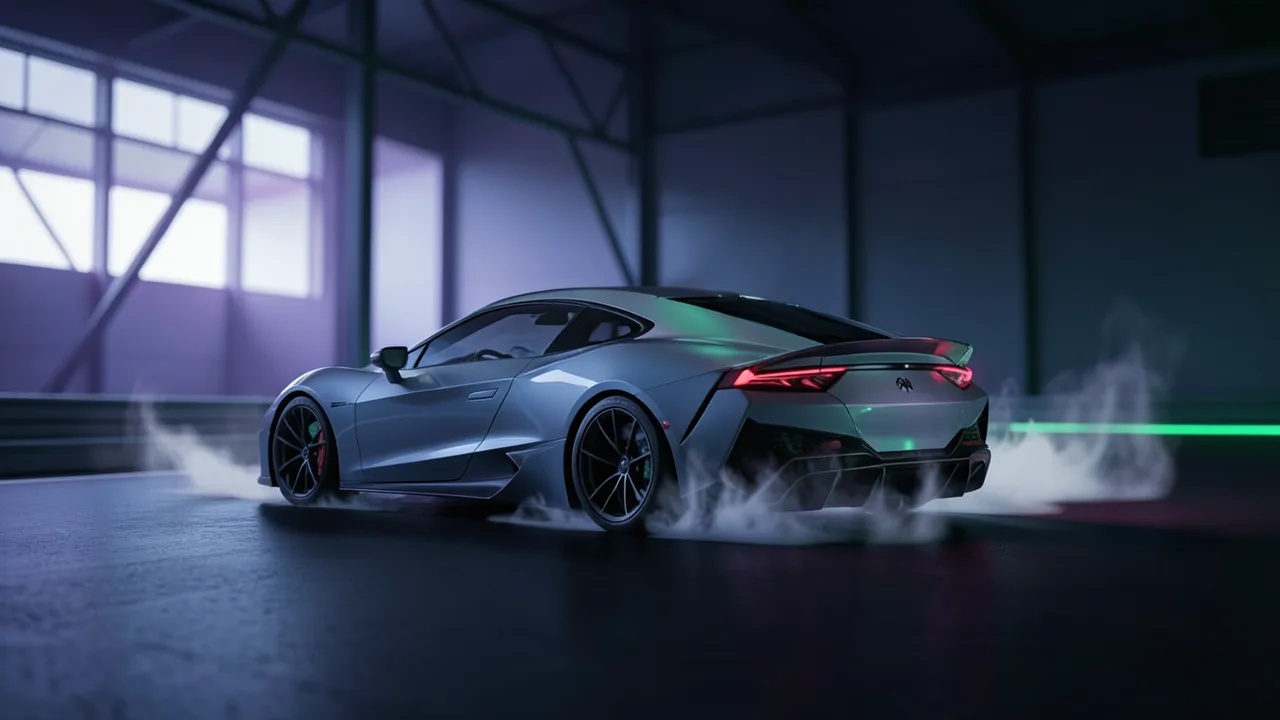
Illustration for: Tesla Unveils Next-Gen Roadster with Flight Capabilities and Sub-1s Acceleration

In brief

  • Tesla unveiled the second-generation Roadster at a SpaceX facility in Texas, demonstrating mid-air flips and inverted driving.
  • The vehicle features cold-gas thrusters and a suction system, with production targeted for 2028.
  • Three variants were announced: Performance, Thrust, and the invite-only Rocket, with deposits ranging from $50,000 to $250,000.
  • Tesla claims 0-60 mph acceleration in 0.81 seconds and a top speed exceeding 230 mph, though regulatory approval for flight features is pending.

Tesla Unveils Next-Gen Roadster with Flight Capabilities and Sub-1s Acceleration

Tesla has unveiled the second-generation Roadster, a redesigned electric sports car featuring flight capabilities and extreme acceleration, nearly nine years after its initial prototype reveal. The launch event took place on October 15, 2026, at the SpaceX test facility in McGregor, Texas. The demonstration showcased the vehicle performing maneuvers previously unseen in production cars, including driving upside down and executing mid-air rotations.

Demonstration and Flight Technology

The event featured a white two-seat Roadster navigating a special track while inverted, using a suction system to maintain contact with the surface. The vehicle then activated built-in cold-gas thrusters to perform a full mid-air rotation, which Tesla dubbed the "kick flip," before landing. In a separate demonstration, the car used its thrust to jump over a lineup of five Tesla vehicles: the Cybercab, Cybertruck, Semi, Model Y, and Model 3.

The flight capabilities rely on a compressed-air propulsion system adapted from SpaceX technology. The system utilizes two high-pressure air storage tanks with a combined capacity of 600 liters, capable of storing approximately 250 kg of air. Air is expelled through 10 nozzles, with the four main rear thrusters discharging airflow faster than the speed of sound. According to Tesla, the total propulsion system generates over 80 kilonewtons (kN) of thrust.

For ground driving, the Roadster uses active aerodynamics and underbody suction fans to generate downforce. Lars Moravy, Tesla's Vice President of Vehicle Engineering, explained that the system presses the vehicle against the road with a force equivalent to up to twice the acceleration of gravity. This allows the car to maintain traction through aggressive cornering and, as demonstrated, drive upside down on a ramp.
Performance and Variants

Tesla confirmed three distinct configurations for the new Roadster: Performance, Thrust, and Rocket. The Performance variant is a two-seater designed for road use, relying on active aerodynamics and the suction downforce system. The Thrust variant adds rear-mounted cold-gas thrusters to enhance acceleration. The Rocket variant is a single-seat, invite-only configuration equipped with a full flight system.

Tesla stated that the Roadster accelerates from 0 to 60 mph in 0.81 seconds, with a top speed exceeding 230 mph. The company claims the Rocket version targets a 0-60 mph time of under 0.59 seconds. All three variants are rated for more than 300 miles of range per charge, a decrease from the 620-mile range promised in the 2017 prototype.

VariantConfigurationKey FeaturesDeposit
PerformanceTwo-seaterActive aerodynamics, suction system$50,000
ThrustTwo-seaterAdds rear cold-gas thrusters$250,000
RocketSingle-seatFull flight system, invite-onlyNot disclosed

Regulatory and Production Status

The legality of the Roadster's flight features on public roads remains unclear. The Rocket variant has not received approval for public road use, and the regulatory pathway for the thruster-enabled features is open. Elon Musk declared during the event, "The flying car is now a reality," though this statement refers to the engineering achievement rather than regulatory clearance for public streets.

Production of the Roadster is targeted to begin in 2028 at the Giga Texas plant. This timeline extends the wait for the vehicle, which was first unveiled in 2017 with an initial delivery promise of 2020. Tesla has not disclosed the final retail pricing for the new models, only the reservation deposits.

Why it matters

The Roadster serves as a "halo car" for Tesla, designed to showcase the company's engineering capabilities and strengthen its premium brand image rather than drive significant sales volume. Morningstar analyst Seth Goldstein noted, "Tesla does not currently have a halo car, or high-performance luxury vehicle designed to showcase an automaker's best engineering and technology. The Roadster will be Tesla's new halo car."

The reveal also highlights the deepening integration of Tesla's automotive and aerospace divisions. The collaboration with SpaceX on thruster technology and the use of the McGregor test site underscore Musk's ambition to combine automotive and aerospace engineering. As Tesla shifts its focus toward AI, autonomous driving, and robotics, the Roadster is positioned as the last manually driven vehicle in its lineup, according to Musk.


Sources

This article was drafted with AI assistance and checked against the sources above. Company claims are reported as claims. Cover image is AI-generated.

Questions readers ask

When and where did Tesla unveil the second-generation Roadster?
Tesla unveiled the vehicle on October 15, 2026, at the SpaceX test facility in McGregor, Texas.
What are the three variants of the new Roadster and their respective reservation deposits?
The three variants are the Performance ($50,000 deposit), Thrust ($250,000 deposit), and Rocket (deposit not disclosed). The Performance and Thrust models are two-seaters, while the Rocket is a single-seat, invite-only configuration.
How does the Roadster achieve flight and upside-down driving capabilities?
The car uses a compressed-air propulsion system with 600-liter tanks and 10 nozzles to generate over 80 kilonewtons of thrust for flight. For ground driving, it employs active aerodynamics and underbody suction fans to press the vehicle against the road with up to twice the acceleration of gravity.
What are the performance specifications and production timeline for the Roadster?
The Roadster accelerates from 0 to 60 mph in 0.81 seconds with a top speed exceeding 230 mph, and production is targeted to begin in 2028 at the Giga Texas plant.

The day's checked news, by email

One short email a day with the top stories. Free, and you can unsubscribe in one click.

Or follow for the latest news:

Advertisement

How do you feel about this story?

Comments 0

No comments yet. Start the discussion.