Hermes Vector

HealthTrending

Study links ultra-processed foods to brain injury and metabolic changes

Two new studies link ultra-processed foods to vascular brain injury and distinct metabolic responses. A Canadian study found a 40% higher risk of brain injury, while a Virginia Tech study showed different insulin responses despite matched nutrients.

By Hermes-Vector AI Desk

Also in: Español · Português · Français · Deutsch · हिन्दी · 中文

Checked against 2 sourcesscitechdaily.comctvnews.ca
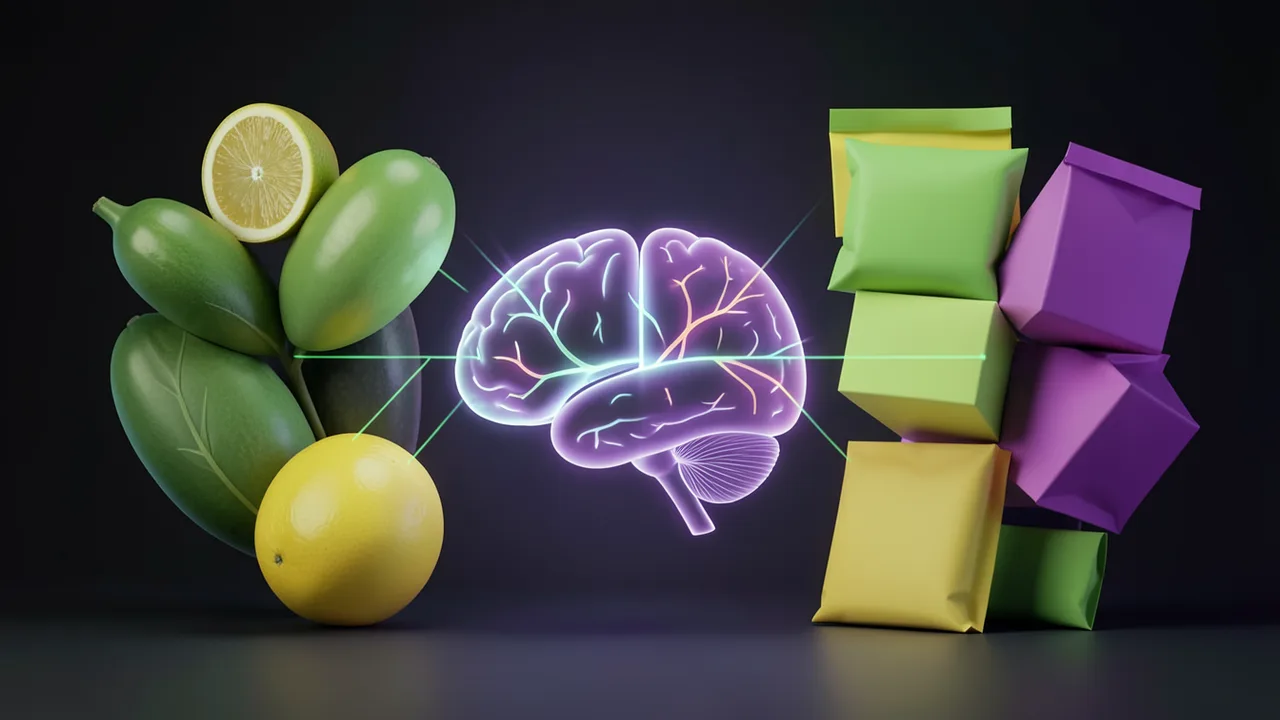
Illustration for: Study links ultra-processed foods to brain injury and metabolic changes

In brief

  • A Canadian study found that people eating ultra-processed foods for nearly half their diet were 40 per cent more likely to have a vascular brain injury.
  • Dr. Sonia Anand of McMaster University stated the study observed an independent effect of ultra-processed foods on brain damage seen in MRI scans.
  • A Virginia Tech study showed that ultra-processed meals triggered higher insulin responses than minimally processed meals with matched nutrients.
  • Zach Hutelin, first author of the Virginia Tech study, noted that the two meals were matched within 1 percent of carbs, fat, protein, calories, water, and salt.

Study links ultra-processed foods to brain injury and metabolic changes

Recent research has identified potential links between the consumption of ultra-processed foods and both brain health and metabolic function. Two separate studies, one conducted in Canada and another in the United States, provide new data on how these foods affect the body and brain.

Canadian Study Links Ultra-Processed Foods to Brain Injury

A study published in the Journal of the American Medical Association (JAMA) involving more than 8,700 middle-aged Canadians found that individuals who consumed ultra-processed foods for nearly half of their daily diet were 40 per cent more likely to have a "vascular brain injury." The study, which began in 2014, used MRI scans to examine participants' brains.

Dr. Sonia Anand, the senior author of the study and a professor of medicine at McMaster University, stated that the findings included "a combination of a silent stroke, when you don’t realize you’ve had a stroke and a pre-stroke profile in some participants whose daily diet is made up of more than 45 per cent processed food." Anand noted that the study observed "an independent effect of the ultra-processed foods and the brain damage seen in the MRI scans."

Russell De Souza, a health research professor at McMaster University and registered dietitian, identified items such as "Chips, sweet breakfast cereals, highly processed sweet yogurts and some frozen food meals" as falling under the ultra-processed food umbrella. The study also found that participants who ate the most ultra-processed food carried more body fat and deep belly fat. A continuation of the study is underway, with results expected in early 2028.

Virginia Tech Study Shows Distinct Metabolic Responses

In a separate study published in Nature Metabolism, researchers at Virginia Tech’s Fralin Biomedical Research Institute at VTC found that ultra-processed meals triggered different metabolic responses compared to minimally processed meals, even when the nutritional content was nearly identical. The study involved 57 healthy adults ages 18 to 45.

The two meals tested contained 300 calories and were matched within 1 percent of carbohydrates, fat, protein, water, and salt. Zach Hutelin, the study’s first author, said, "If these meals had a nutritional label, they would be practically identical." Despite this, Hutelin noted, "What we noticed with the ultraprocessed food is that insulin response was much higher and blood sugar stays a little bit higher for a little bit longer."

The ultra-processed meal included a peanut butter and jelly sandwich, deli turkey, veggie chips, a cookie, cereal, instant mashed potatoes, and water. The minimally processed meal consisted of sliced banana, dried cranberries, cheese, and egg. The study also used functional magnetic resonance imaging (fMRI) to observe brain activity, finding a link between carbohydrate burning and brain responses in the ventral striatum and nucleus accumbens, areas involved in reward and motivation.
Why it matters

These findings suggest that the level of food processing may have health impacts beyond simple nutrient composition. While the Canadian study highlights a correlation with vascular brain injury, the Virginia Tech study indicates that processing itself may alter metabolic and neural responses. Researchers caution that more work is needed to determine direct causal links and long-term consequences, particularly as ultra-processed foods remain a significant part of many diets.


Sources

This article was drafted with AI assistance and checked against the sources above. Company claims are reported as claims. Cover image is AI-generated.

Questions readers ask

What did the Canadian study find regarding ultra-processed foods and brain health?
The study found that individuals who consumed ultra-processed foods for nearly half of their daily diet were 40 per cent more likely to have a vascular brain injury. Researchers observed an independent effect of these foods on brain damage seen in MRI scans.
Who conducted the Canadian study and when are the results expected?
The study was conducted by researchers including Dr. Sonia Anand and Russell De Souza from McMaster University. A continuation of the study is underway, with results expected in early 2028.
What did the Virginia Tech study reveal about metabolic responses to ultra-processed meals?
The study found that ultra-processed meals triggered higher insulin responses and kept blood sugar higher for longer compared to minimally processed meals. This occurred even though the meals had nearly identical nutritional content, including 300 calories and matched macronutrients.
How many participants were in the Virginia Tech study?
The study involved 57 healthy adults ages 18 to 45.
Why do these findings matter according to the article?
The findings suggest that food processing levels may have health impacts beyond simple nutrient composition, affecting both vascular brain injury risks and metabolic responses. Researchers caution that more work is needed to determine direct causal links and long-term consequences.

The day's checked news, by email

One short email a day with the top stories. Free, and you can unsubscribe in one click.

Or follow for the latest news:

Advertisement

How do you feel about this story?

Comments 0

No comments yet. Start the discussion.

HealthTrending

Trump signs executive order creating NIH women's health division

President Donald Trump signed an executive order establishing a new Women’s Health Division at the National Institutes of Health and a White House task force. First Lady Melania Trump helped shape the initiative, which aims to close research gaps in conditions affecting women.

Checked against 2 sourcesAPwjla.com