Hermes Vector

Tech

Tesla unveils second-generation Roadster with flight capabilities

Tesla has revealed its new Roadster, featuring cold gas thrusters for short flights and sub-one-second acceleration. Production is scheduled for 2028, with deposits required for specific configurations.

By Hermes-Vector AI Desk

Also in: Español · Português · Français · Deutsch · हिन्दी · 中文

Checked against 2 sourcesbnnbloomberg.cafinance.yahoo.com
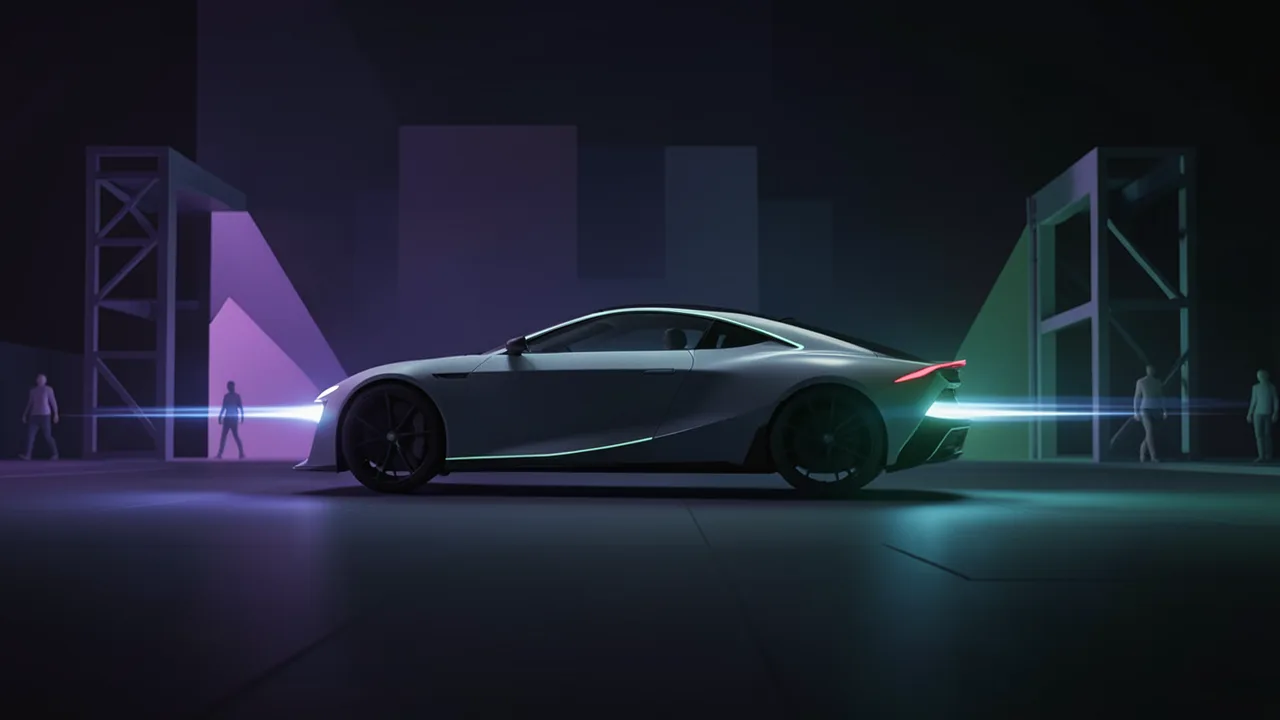
Illustration for: Tesla unveils second-generation Roadster with flight capabilities

In brief

  • Tesla's new Roadster features cold gas thrusters for short flights and sub-one-second acceleration.
  • Production is scheduled for 2028, with deposits required for Performance and Thrust configurations.
  • The vehicle is not approved for public road use, and regulatory hurdles for flying cars remain.
  • Tesla describes the Roadster as the 'best of the last human-driven cars' despite its autonomous focus.

Tesla unveils second-generation Roadster with flight capabilities

Tesla has unveiled its second-generation Roadster, a sports car equipped with cold gas thrusters and a suction system that allows for short bursts of flight and mid-air rotation. The vehicle was demonstrated at SpaceX’s Rocket Development and Testing facility in Waco, Texas, where executives noted they "borrowed" some SpaceX technology for the launch. Tesla CEO Elon Musk stated on social media platform X, "Turns out the future does have flying cars."

Flight and Performance Capabilities

The new Roadster is designed to accelerate from zero to 60 miles per hour in less than one second. During a test at the event, the car achieved a 0-60 mph time of 0.81 seconds. Tesla says the vehicle can reach a top speed of 230 mph, while Musk suggested the production version could target Mach 0.5 (383 mph).

The car comes in three configurations:

  • Performance: Seats two, with a multi-mode suction system for on and off-track performance.
  • Thrust: Seats two, with a multi-mode suction system and rear-mounted cold-gas thrusters enabling 0–60 mph in less than one second.
  • Rocket: Seats one, with a multi-mode suction system and perimeter-mounted cold-gas thrusters for forward, upward acceleration and lateral rotational movement.

Tesla states that all three versions have a range exceeding 300 miles. The official 0-60 mph times are listed as less than 1.6 seconds for Performance, less than 0.9 seconds for Thrust, and less than 0.59 seconds for Rocket.

Production Timeline and Pricing

Production for consumers is not expected to begin until 2028. Tesla has not released a Manufacturer's Suggested Retail Price (MSRP) for the Rocket version, which is invite-only. For other models, Tesla is asking prospective buyers to put down a $5,000 deposit, followed by a $45,000 wire transfer within 10 days for the Performance version. The Thrust variant requires a $250,000 deposit.

The unveiling event was delayed by two weeks from its original October 1 date due to weather conditions at the demo site. Tesla shares climbed slightly in morning trading on Friday following the announcement.

Regulatory and Strategic Context

Despite the flight capabilities, the vehicle is not currently approved for public road use. The fine print on Tesla’s website notes: "Not approved for public road use." Regulatory hurdles for flying vehicles remain significant.

While Tesla has focused heavily on autonomous driving and its robotaxi business, the company describes the new Roadster as the "best of the last human-driven cars." Musk noted that the Thursday demo was technically autonomous "to make sure we don’t kill anyone," but stated that long-term, the new Roadster will be "the only manually driven car that Tesla makes."

"This is not necessarily a safety-optimized car," Musk said, adding that "it takes the fun meter to 11 out of 10."

Why it matters

The unveiling highlights Tesla's continued expansion into high-performance niche markets alongside its broader autonomous vehicle strategy. While the company continues to develop self-driving features and robotaxis, the Roadster represents a distinct product line aimed at enthusiasts. The integration of SpaceX technology demonstrates cross-company resource sharing, though the practical application of flight features on public roads remains restricted by current regulations.


Sources

This article was drafted with AI assistance and checked against the sources above. Company claims are reported as claims. Cover image is AI-generated.

Questions readers ask

What are the flight capabilities of the new Tesla Roadster?
The second-generation Roadster is equipped with cold gas thrusters and a suction system that allows for short bursts of flight and mid-air rotation. These features were demonstrated at SpaceX’s Rocket Development and Testing facility in Waco, Texas.
When will the Tesla Roadster be available for purchase?
Production for consumers is not expected to begin until 2028. Tesla has not released a Manufacturer's Suggested Retail Price for the Rocket version, which is invite-only.
How much does it cost to reserve the different Roadster models?
Prospective buyers must put down a $5,000 deposit, followed by a $45,000 wire transfer within 10 days for the Performance version. The Thrust variant requires a $250,000 deposit.
Is the new Tesla Roadster approved for public road use?
No, the vehicle is not currently approved for public road use. The fine print on Tesla’s website notes: 'Not approved for public road use.' Regulatory hurdles for flying vehicles remain significant.
What are the acceleration times for the different Roadster configurations?
The official 0-60 mph times are listed as less than 1.6 seconds for Performance, less than 0.9 seconds for Thrust, and less than 0.59 seconds for Rocket. During a test at the event, the car achieved a 0-60 mph time of 0.81 seconds.

The day's checked news, by email

One short email a day with the top stories. Free, and you can unsubscribe in one click.

Or follow for the latest news:

Advertisement

How do you feel about this story?

Comments 0

No comments yet. Start the discussion.