Mechanism of Recovery
Coral bleaching occurs when rising sea temperatures cause corals to expel the symbiotic algae, known as Symbiodiniaceae, that live in their tissues and provide them with nutrients. Without these algae, corals are likely to starve and die.
The study focused on the coral species Pocillopora damicornis. Researchers prepared ten pairs of fragments from the same animal, with each pair consisting of one bleached and one healthy fragment. Five pairs were placed in contact, while five were separated by a few millimeters.
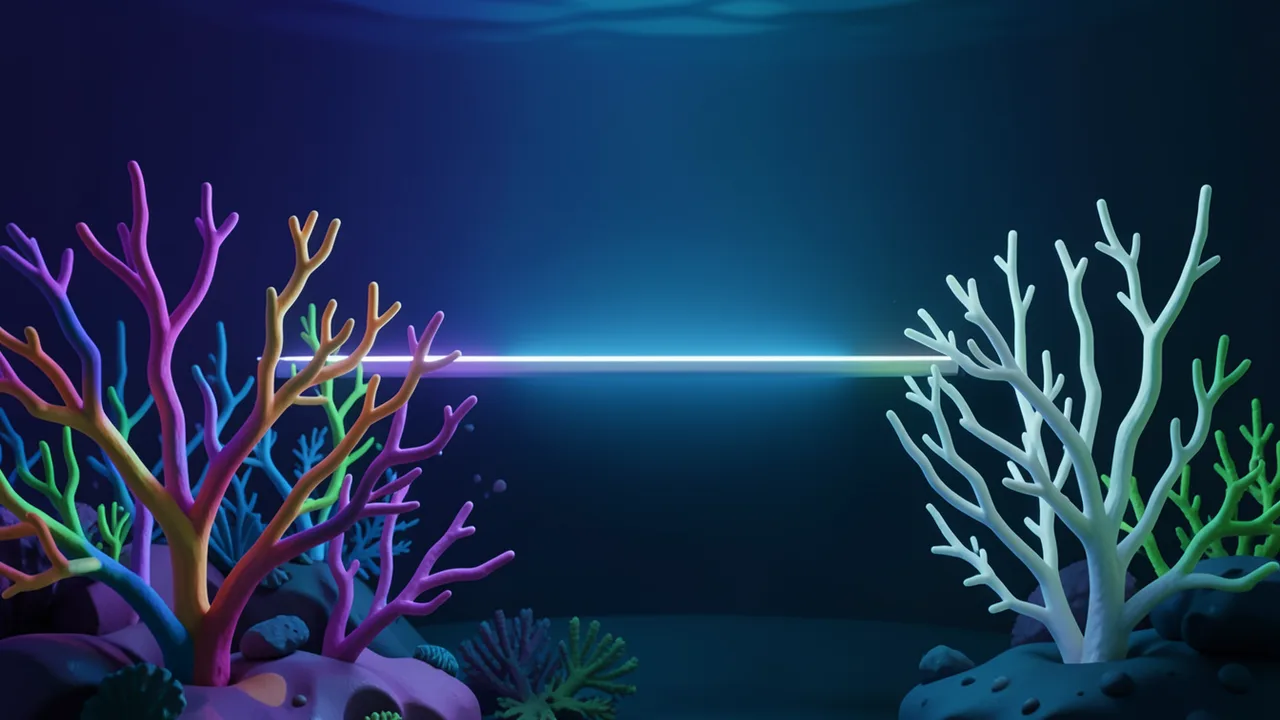
According to the study, the touching pairs showed significant recovery. "We were blown away when we watched the colour of the algal symbionts transfer over to the bleached coral, reviving it in a very short period of time," says Danny Collins, a PhD student at Stanford University and co-author of the study. By week two, the symbiont population in the recovering coral was doubling every four days. The bleached coral in the touching pairs fully recovered within eight weeks.
In contrast, the bleached fragments in the separated pairs died after 20 weeks. The research indicates that the recovery is driven by the formation of a tissue bridge between the two fragments, which enables the transfer of symbionts.