Hermes Vector

World

Violent anti-immigration protests erupt in South Africa after court ruling

Anti-migrant protests turned violent in Durban and Soweto following a court order to resume asylum processing. Vehicles were torched and shops looted, prompting the government to withdraw a related directive.

By Hermes-Vector AI Desk

Also in: Português · Français · Deutsch

Checked against 4 sourcesdw.comAl Jazeeraallafrica.comdaily-sun.com
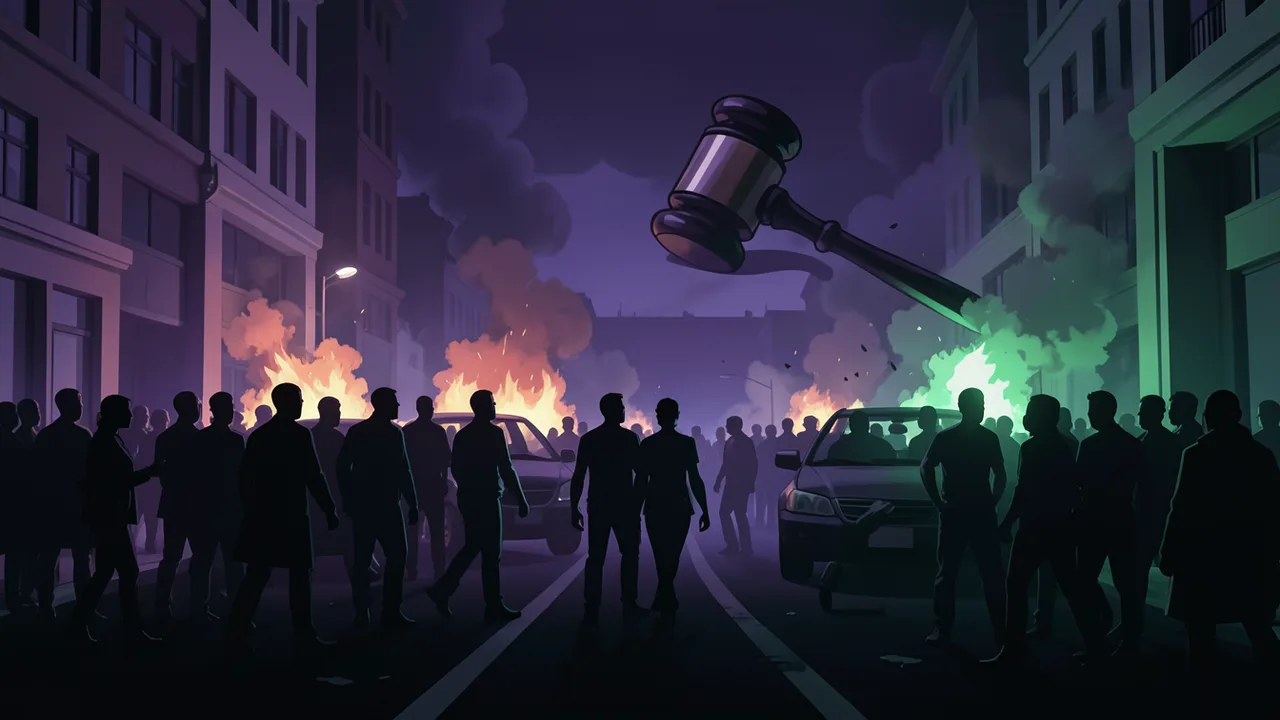
Illustration for: Violent anti-immigration protests erupt in South Africa after court ruling

In brief

  • Violent protests in Durban and Soweto led to the torching of at least 24 vehicles and looting of foreign-owned shops.
  • The unrest was sparked by a Constitutional Court ruling requiring the government to resume processing asylum applications.
  • The Department of Home Affairs withdrew a directive on asylum intake following the violence, while the court ruling remains in force.
  • Government spokesperson William Baloyi attributed the violence to disinformation, stating the ruling does not automatically grant refugee status.

Violent anti-immigration protests erupt in South Africa after court ruling

Violent anti-immigration protests erupted in South Africa on Thursday, fueled by tensions over a court order requiring the government to resume processing asylum applications. The unrest, which included arson and looting in the coastal city of Durban and the Soweto township of Johannesburg, has led to the withdrawal of a government directive on asylum intake.

Violence in Durban and Soweto

In Durban, clashes between protesters and foreign nationals resulted in the torching of at least 14 vehicles, according to police. Acting National Police Commissioner Lieutenant General Puleng Dimpane stated that three people were arrested in the city. AFP reporters observed police firing rubber bullets to disperse protesters who reportedly set fire to a business run by foreigners. A municipal building was also set on fire, an official said.

In Soweto, residents clashed with foreign shop owners, and gunshots were heard, according to the broadcaster Newzroom Afrika. Johannesburg Metropolitan Police Department spokesman Superintendent Xolani Fihla confirmed that at least nine vehicles were torched in the area. "It's reported that there were clashes between foreign nationals in the area and South African nationals," Fihla said. "At the present moment, I can confirm that no injuries have been reported."

Court Ruling and Government Response

The protests followed a July Constitutional Court decision that deemed certain provisions of the government's refugee policy unconstitutional. The court ruled that these provisions prevented individuals from accessing the asylum system on procedural grounds, such as entering the country illegally. This ruling led hundreds of people to flock to government refugee centers, reportedly including those who do not qualify for asylum.

Government spokesperson William Baloyi said the violence was triggered by people spreading deliberately false information about the constitutional court ruling. Baloyi emphasized that the decision "does not grant refugee status or permanent residence automatically to anyone who enters South Africa." "We are deeply concerned by what is going on now," he added.

Following the unrest, the Department of Home Affairs withdrew a directive on the intake of asylum applications. Gauteng Premier Panyaza Lesufi welcomed the withdrawal, stating it creates an opportunity for further consultation without undermining the court judgment. The ruling remains in force, and asylum applications must still be assessed individually.

Background of Xenophobic Tensions

South Africa has experienced months of anti-immigrant protests this year. Populist and anti-immigrant groups have demanded that undocumented foreign nationals leave by June 30. Amidst international criticism, tens of thousands of people have fled the country, while some were repatriated by their governments. At least four foreign nationals were killed in earlier violence, according to the South African police, though some foreign governments said the toll was higher.

Although South Africa has a third of its population unemployed, it remains the largest economy in Africa and continues to attract migrants. Migrants are often blamed for taking jobs, fueling crime, and straining public services. However, social scientists have said these accusations are not supported by evidence.

Why it matters

The resurgence of xenophobic violence highlights the deep social and economic fractures in South Africa, where high unemployment and inequality fuel resentment against migrants. The government's struggle to balance legal obligations under the Constitutional Court with public pressure and disinformation poses a significant challenge to social stability and South Africa's international relations. The withdrawal of the asylum directive indicates an attempt to de-escalate tensions, but the underlying issues remain unresolved as local government elections approach.


Sources

This article was drafted with AI assistance and checked against the sources above. Company claims are reported as claims. Cover image is AI-generated.

Questions readers ask

What triggered the violent anti-immigration protests in South Africa?
The protests were fueled by tensions over a Constitutional Court ruling that required the government to resume processing asylum applications, which was exacerbated by false information spread about the decision.
What specific violence occurred in Durban and Soweto?
In Durban, at least 14 vehicles were torched and three people were arrested, while in Soweto, at least nine vehicles were burned and gunshots were heard, though no injuries were reported.
How did the government respond to the unrest?
The Department of Home Affairs withdrew a directive on the intake of asylum applications, and Gauteng Premier Panyaza Lesufi welcomed this move as an opportunity for further consultation.
What did the July Constitutional Court decision rule regarding refugee policy?
The court deemed certain provisions of the government's refugee policy unconstitutional because they prevented individuals from accessing the asylum system on procedural grounds, such as entering the country illegally.
Why is this situation significant for South Africa?
The violence highlights deep social and economic fractures driven by high unemployment and inequality, posing a challenge to social stability and international relations as local government elections approach.

The day's checked news, by email

One short email a day with the top stories. Free, and you can unsubscribe in one click.

Advertisement

Comments