Hermes Vector

ScienceTrending

World's oldest shipwreck found off Turkey; Roman dishware also recovered

Archaeologists have identified a 4,400-year-old shipwreck off Kekova Island as the world's oldest. Separately, a 2,100-year-old wreck near Adrasan yielded thousands of intact ceramic dishes.

By Hermes-Vector AI Desk

Checked against 3 sourcesBBCyahoo.comsmithsonianmag.com
Illustration for: World's oldest shipwreck found off Turkey; Roman dishware also recovered

In brief

  • A shipwreck off Kekova Island, Turkey, has been dated to 4,400-4,700 years ago, making it the world's oldest known shipwreck.
  • The Kekova vessel carried over 30 amphorae, some of which still contained residue that may be olive oil, wine, or tree resin.
  • A separate 2,100-year-old wreck near Adrasan yielded 6,511 intact ceramic dishes, likely bound for Rome.
  • The Adrasan cargo included plates and bowls from Rhosus and amphorae from the Aegean Islands, preserved by clay packing.

World's oldest shipwreck found off Turkey; Roman dishware also recovered

Archaeologists have discovered what they say is the world's oldest shipwreck off the coast of Turkey. The vessel, dated to between 4,400 and 4,700 years ago, was found near Kekova Island in Antalya. This places the wreck in the Early Bronze Age, around the same time the Great Pyramid was being built.

The Kekova Discovery

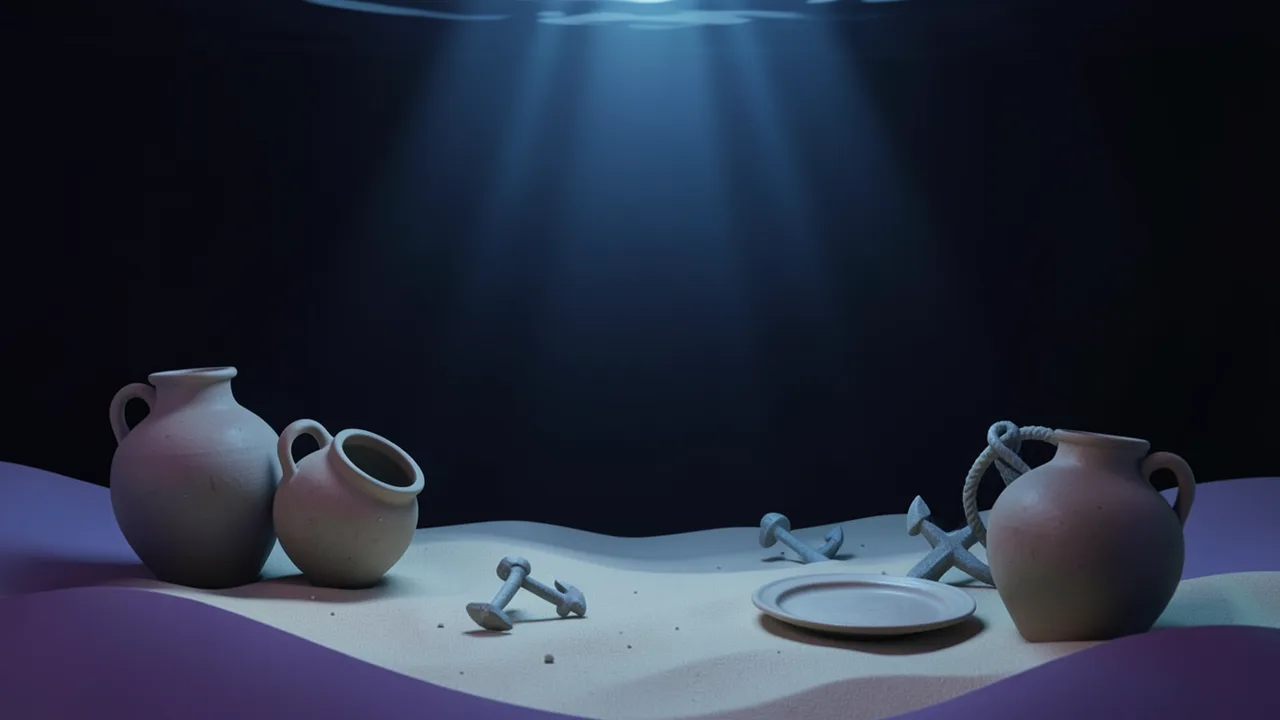
The ship's wooden structure did not survive, but its cargo of ceramic storage pots, known as amphorae, remained on the sea floor at a depth of 30 meters. The expedition, led by Prof Hakan Öniz of Akdeniz University, recovered more than 30 amphorae and three large stone anchors.

Because the wood was gone, radiocarbon dating was not possible. Instead, the team analyzed the pottery styles. Öniz stated that the distinctive design of the Kekova ceramics—featuring two handles, a middle ridge, and a flat base—matched amphorae found in Egypt and the Middle East from the same period.

"Comparing the decoration techniques… we can definitely say our wreck is Early Bronze Age. This is 100%," Öniz said.

Dr. Karin Sowada, an archaeologist from Macquarie University, examined the recovered pots and found viscous, glossy residue inside some of them. "I looked inside and nearly fainted. I could not believe how much [residue] was visible," she said. The team is currently analyzing the residue to determine if it was olive oil, wine, or tree resins, though Sowada noted the jars may have been reused.

The wreck previously held the record for the oldest shipwreck was off Dokos, Greece, dating to about 4,200 years ago. The oldest wreck with preserved wood is in the Black Sea off Bulgaria, dating to about 2,400 years ago.
Roman-Era Dishware Near Adrasan

In a separate discovery, researchers from Akdeniz University have excavated a 2,100-year-old shipwreck near the village of Adrasan. The site, first found by a local dive club in 2007 and surveyed in 2023, lies between 125 and 180 feet below the surface.

The excavation has yielded 6,511 ceramic plates, bowls, and trays in 122 different forms. The artifacts were packed tightly into wooden crates with clay serving as protective material, which helped preserve them.

Researchers believe the bulk of the plates and bowls were manufactured in the ancient port of Rhosus (now Arsuz), while the amphorae were likely made on the Aegean Islands. The ship is believed to have been part of a trading network between Antioch, Greece, and the Italian Peninsula, likely sinking on its way to Rome after hitting shoals during a storm.

Mehmet Nuri Ersoy, Turkey’s culture and tourism minister, stated in a social media post that the artifacts "preserve evidence of Anatolia’s production expertise and the Mediterranean’s trading history." The Roman statesman Cicero mentioned Rhosus in a letter in 50 B.C.E., referring to its "fine pottery."

Why it matters

These discoveries provide rare physical evidence of ancient maritime trade networks. The Kekova wreck pushes back the timeline for known shipwrecks by centuries, offering insights into Early Bronze Age logistics. Meanwhile, the Adrasan wreck demonstrates the sophistication of Roman-era packaging and the extensive distribution of luxury goods across the Mediterranean.


Sources

This article was drafted with AI assistance and checked against the sources above. Company claims are reported as claims. Cover image is AI-generated.

The day's checked news, by email

One short email a day with the top stories. Free, and you can unsubscribe in one click.

Or follow for the latest news:

Advertisement

Comments