Hermes Vector

Science

New Dinosaur Species Identified from Century-Old Museum Drawer

A fossil stored at the Natural History Museum since 1924 has been identified as Invictibellatrix amberina, the first definitive megaraptor found in Europe.

By Hermes-Vector AI Desk

Checked against 2 sourcesbluewin.chmirror.co.uk
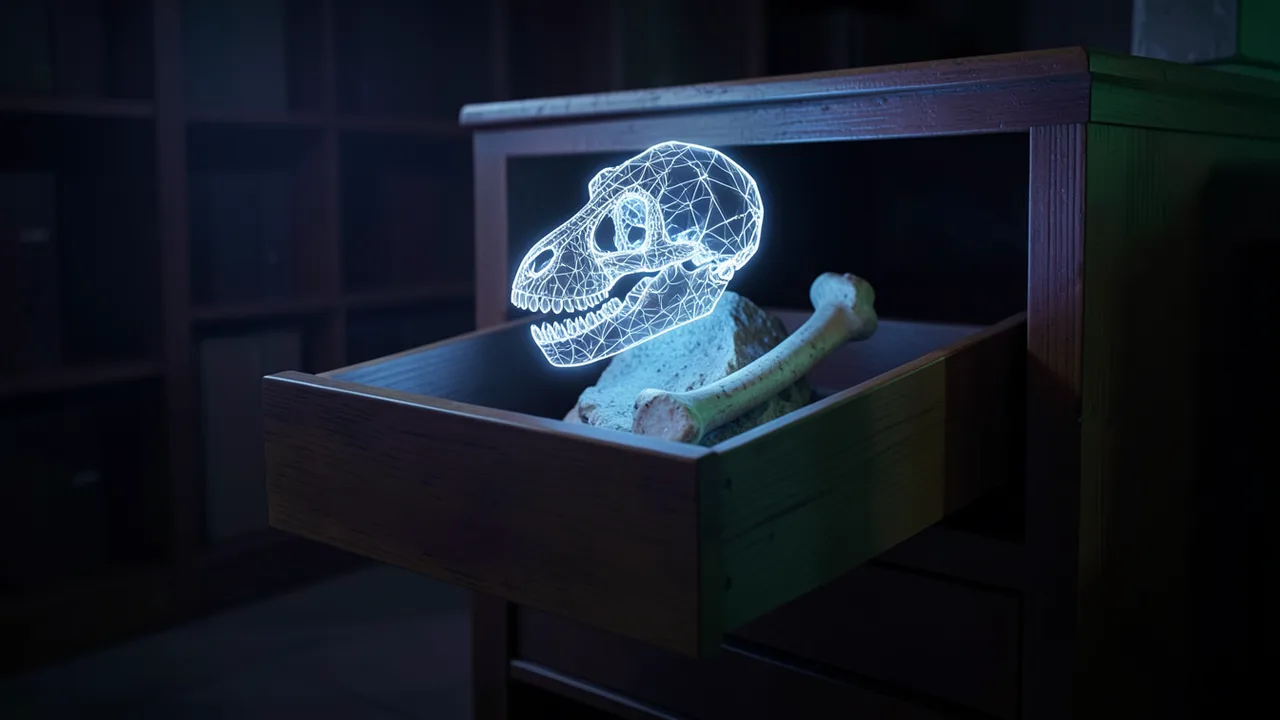
Illustration for: New Dinosaur Species Identified from Century-Old Museum Drawer

In brief

  • A fossil found in 1924 on the Isle of Wight has been identified as the new species Invictibellatrix amberina.
  • The discovery marks the first definitive evidence of a megaraptor dinosaur in Europe.
  • Researchers estimate the predator was three to four meters long and likely used claws rather than jaws to hunt.
  • The study suggests megaraptors were more widespread across Eurasia during the Early Cretaceous than previously thought.

New Dinosaur Species Identified from Century-Old Museum Drawer

A fossil that sat unnoticed in a drawer at the Natural History Museum in London for nearly a century has been identified as a new species of dinosaur. The specimen, discovered on the Isle of Wight in 1924, belongs to a previously unknown megaraptoran named "Invictibellatrix amberina."

According to a scientific paper published in "Royal Society Open Science," this discovery provides the first definitive evidence of a megaraptor in Europe. Megaraptorans are a group of bipedal predatory dinosaurs closely related to tyrannosaurs. The finding suggests that these dinosaurs were more widely distributed across Eurasia during the Early Cretaceous period than previously documented.

Identification and Analysis

The significance of the fossil remained unrecognized for decades until a research team led by paleontologist Cassius Morrison of University College London (UCL) conducted a new analysis. The team used CT scans of the fossilized braincase to create three-dimensional models, which were then compared with the skulls of other predatory dinosaurs.

The analysis revealed an unusual combination of anatomical features, including an oval-shaped opening for the spinal cord and a distinctive bony crest. These characteristics allowed researchers to classify "Invictibellatrix" as an early member of the megaraptor group. "It’s a real mystery that this fossil was overlooked for so long," Morrison told the "Independent."

Physical Characteristics and Behavior

Researchers estimate that "Invictibellatrix amberina" measured between three and four meters in length and stood just over 1.5 meters tall. The dinosaur likely had feathers and possessed curved claws measuring 10 to 20 centimeters long. Unlike larger predators that relied on powerful jaws, this megaraptor probably used its large arms and claws to hunt smaller dinosaurs, lizards, and mammals.

Dr. Morrison noted that while the animal was not the apex predator of its time, its size profile would have made it a significant threat to humans. "It was not the apex predator of its time, but for humans this dinosaur would have been more dangerous than a T.rex," Morrison said. "We would have been perfectly sized prey, about a third of their body weight."

He added, "They definitely would have chased us. A T.rex would not have bothered, as we would have been too small." Morrison explained that the dinosaur occupied a role in the food chain similar to that of a hyena today.

Historical Distribution

The discovery helps fill a gap in the evolutionary history of megaraptorans. The study concludes that the group was apparently much more widespread in the early Cretaceous than previously known. Researchers suspect that megaraptors spread across Eurasia and later reached southern landmasses. In the late Cretaceous, the group apparently disappeared from northern regions, while in Gondwana they evolved into large apex predators.

Why it matters

This finding challenges previous assumptions about the geographic range of megaraptorans, confirming their presence in Europe for the first time. It also highlights the potential value of re-examining historical museum collections, as Morrison noted, "Lots of bones are found on the Isle of Wight – who knows what else is waiting to be discovered."


Sources

This article was drafted with AI assistance and checked against the sources above. Company claims are reported as claims. Cover image is AI-generated.

The day's checked news, by email

One short email a day with the top stories. Free, and you can unsubscribe in one click.

Or follow for the latest news:

Advertisement

Comments