Hermes Vector

Politics

US Army Unveils XM1776 Mobile Howitzer Prototype

The US Army designated its new mobile howitzer prototype the XM1776 at the Association of the United States Army conference. Developed by Hanwha Defense USA, the vehicle aims to address range and survivability gaps identified in the war in Ukraine.

By Hermes-Vector AI Desk

Checked against 2 sourceswashingtonexaminer.comtaskandpurpose.com
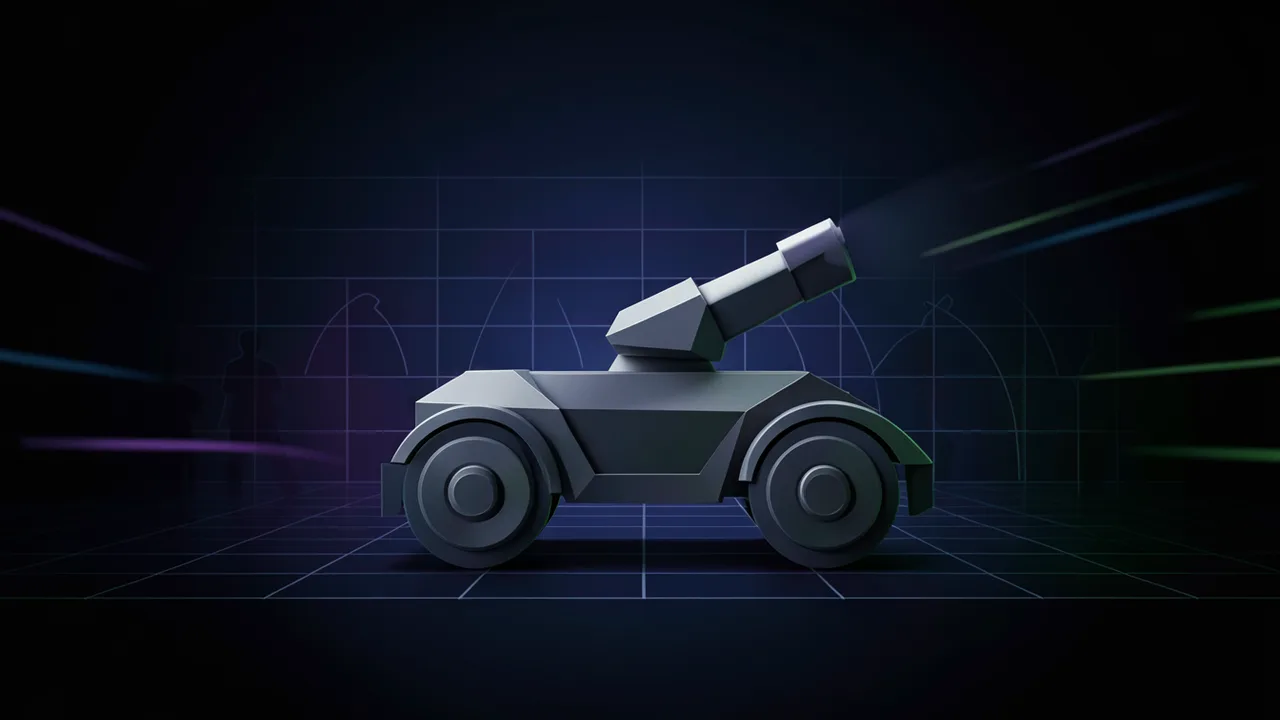
Illustration for: US Army Unveils XM1776 Mobile Howitzer Prototype

In brief

  • The US Army designated its new mobile howitzer prototype the XM1776 at the AUSA conference.
  • Developed by Hanwha Defense USA, the XM1776 is based on the K9 Mobile Howitzer and uses a truck chassis.
  • The vehicle aims to improve survivability against drones by enabling a 'shoot and scoot' capability within 90 seconds.
  • The Army has ordered six prototypes for testing, with plans to replace the M777 in select formations if fielded.

US Army Unveils XM1776 Mobile Howitzer Prototype

The US Army officially designated its new mobile howitzer prototype the XM1776 during a ceremony at the Association of the United States Army (AUSA) conference in Washington, D.C. on Monday. The announcement coincided with the Army taking possession of the first prototype of the Mobile Tactical Cannon, which is developed by Hanwha Defense USA.

Design and Capabilities

The XM1776 is derived from Hanwha’s K9 Mobile Howitzer and is built on a truck chassis. It features a roughly 26-foot-long barrel and is operated by a crew of three. According to the Army, the vehicle is designed to offer greater mobility and range than the current towed M777 howitzer.

Jason Pak, senior director of business development and head of land systems artillery at Hanwha, told Task & Purpose that the cannon can fire as many as nine rounds per minute. This is more than double the M777’s rate of four rounds per minute. Pak noted that the automated loader allows soldiers to operate the cannon from inside the truck cab using cameras installed in the turret. If automation fails, the system can be fired manually.

Regarding range, Task & Purpose reports the XM1776 can strike targets up to 37 miles away, compared to the M777’s 20-mile range with specific ammunition. However, Washington Examiner quotes Michael Smith, President and Chief Operating Officer of Hanwha Defense USA, stating the 58-caliber barrel can fire rounds "well beyond" 50 miles. Due to this discrepancy in reported range figures, the specific maximum distance remains unconfirmed by a single consistent source.

Addressing Battlefield Lessons

The development of the XM1776 is influenced by lessons from the war in Ukraine, particularly regarding the vulnerabilities of traditional artillery. Smith stated that the war highlighted deficiencies in the M777 and M109 self-propelled howitzers concerning range, survivability, and volume of fire.

"In this battle space, within 30 seconds of first fire, you’re going to have a drone on top of you," Smith said. "So the need to shoot and scoot, to get in place, fire, displace, within 90 seconds, is a must."

The Army noted that the goal for these faster-moving cannons is to increase mobility and reliability on "the modern, highly transparent battlefield" where drones and counter-battery systems make slower positions vulnerable. Smith said the XM1776 can deploy its four stabilizers within about 18 seconds. The vehicle carries 40 on-board shells and can be resupplied automatically by the K10 Ammunition Resupply System.

Production and Future Fielding

Lt. Gen. Francisco J. Lozano, director of the Rapid Capabilities and Critical Technologies Office, announced the designation. He stated the name XM1776 reflects "the spirit of innovation, independence, and determination that has long characterized the United States Army and the nation it serves."

The Army has ordered six prototypes under an Other Transaction Authority contract, with an option to buy 12 more. Pak explained that this contract structure allows for testing, experimentation, and modifications before full-rate production. Hanwha is setting up a test facility in Opelika, Alabama, to develop the system with the Army.

Smith said Hanwha aims to produce 48 vehicles per year, though he noted "the Army would love to see 96 per year," which would require additional investment. The Army stated that if approved for fielding, the XM1776 will replace the M777 in "select formations" rather than outright replacing it across the entire force.

Why it matters

The XM1776 represents a shift in US artillery strategy toward wheeled, highly mobile systems capable of rapid deployment and displacement. This change addresses the increased threat of drone surveillance and counter-battery fire observed in recent conflicts, aiming to keep artillery crews alive and operational in contested environments.


Sources

This article was drafted with AI assistance and checked against the sources above. Company claims are reported as claims. Cover image is AI-generated.

The day's checked news, by email

One short email a day with the top stories. Free, and you can unsubscribe in one click.

Or follow for the latest news:

Advertisement

Comments

Politics

German Labor Minister Bas resigns; coalition tensions rise

Bärbel Bas resigned as Germany's Labor Minister and SPD co-chair, citing grief and political attacks. Her departure intensifies coalition strains over pension reforms as Alexander Schweitzer is set to replace her.

Checked against 3 sourcesdw.comft.combrusselssignal.eu