Hermes Vector

SpaceTrending

NOAA issues G2 geomagnetic storm watch for Oct. 9

NOAA has issued a G2 geomagnetic storm watch for October 9 following a solar eruption. The event could produce northern lights visible as far south as New York and Idaho.

By Hermes-Vector AI Desk

Also in: Español

Checked against 2 sourcesspace.combigrapidsnews.com
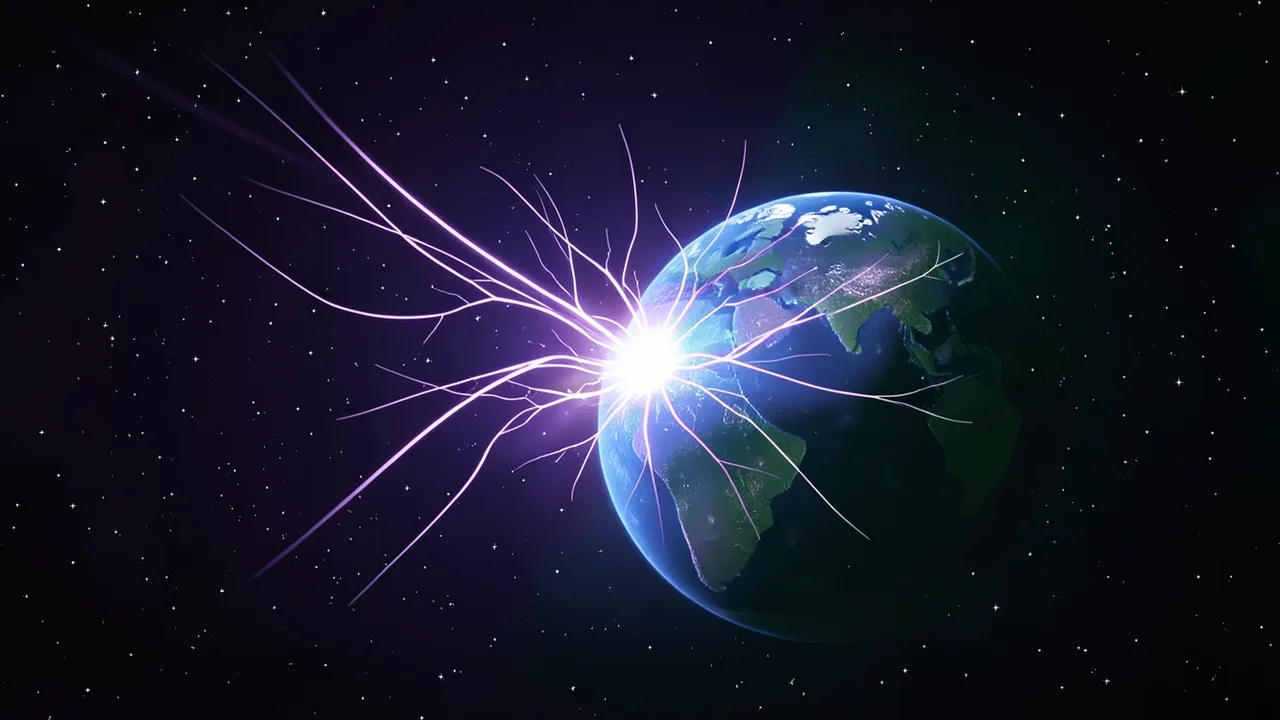
Illustration for: NOAA issues G2 geomagnetic storm watch for Oct. 9

In brief

  • NOAA issued a G2 geomagnetic storm watch for Oct. 9 following an M1.4 solar flare on Oct. 6.
  • The CME is estimated to travel at 560 km/s, with arrival times varying between 1 a.m. and midnight EDT.
  • Auroras could potentially be visible as far south as New York and Idaho if the storm reaches G2 intensity.
  • Additional solar flares from regions AR4549 and AR4545 may cause further geomagnetic activity around Oct. 11.

NOAA issues G2 geomagnetic storm watch for Oct. 9

NOAA's Space Weather Prediction Center (SWPC) has issued a moderate (G2) geomagnetic storm watch for Oct. 9. The watch follows a powerful solar eruption on Oct. 6 that launched a coronal mass ejection (CME) toward Earth.

Solar Eruption and CME Details

The eruption originated from sunspot region AR4549 and was accompanied by an M1.4-class solar flare. Forecasters at Belgium's Solar Influences Data Analysis Center (SIDC) estimate the CME is traveling at around 560 km/s.

Current models indicate the CME could reach Earth in the early hours of Oct. 9 (UTC), though exact timing remains uncertain. NOAA's WSA-ENLIL model suggests the leading edge could arrive at around 05:00 UTC (1 a.m. EDT) on Oct. 9. The U.K. Met Office predicts an arrival at around midnight EDT (0400 GMT), give or take 6 hours.

Potential for Northern Lights

Geomagnetic storms are ranked on a scale from G1 (minor) to G5 (extreme). G2 conditions correspond to Kp 6. During storms of this strength, auroras have previously been seen as far south as New York and Idaho.

NOAA's latest 3-day forecast shows:

  • G1 conditions between 11 p.m. and 2 a.m. EDT on Oct. 8-9 (0300-0600 GMT)
  • Possible G2 peak between 5 a.m. and 8 a.m. EDT (0900 and 1200 GMT) on Oct. 9

The visibility of the northern lights depends on the magnetic orientation of the CME when it reaches Earth. A southward component in the CME's magnetic field allows for efficient coupling with Earth's magnetosphere, potentially enhancing the aurora display.

Additional Solar Activity

At the time of the initial report, AR4549 produced another M-class solar flare, an M1.4, just hours after the first eruption. Two prominent sunspot regions, AR4549 and AR4545, are currently facing Earth and have shown increasing flare activity.

Additionally, coronal holes rotating across the Earth-facing side of the sun are expected to send further streams of fast solar wind, with another enhanced period of geomagnetic activity predicted around Oct. 11.

Why it matters

This event highlights the ongoing variability of solar activity and its direct impact on Earth's upper atmosphere. While G2 storms are considered moderate, they can disrupt satellite operations, radio communications, and power grids, while also providing opportunities for aurora viewing at lower latitudes than usual.


Sources

This article was drafted with AI assistance and checked against the sources above. Company claims are reported as claims. Cover image is AI-generated.

Questions readers ask

What is the NOAA G2 geomagnetic storm watch for?
NOAA's Space Weather Prediction Center has issued a moderate (G2) geomagnetic storm watch for Oct. 9 following a solar eruption on Oct. 6.
When is the coronal mass ejection expected to reach Earth?
Current models suggest the CME could arrive in the early hours of Oct. 9, with NOAA's WSA-ENLIL model predicting an arrival around 05:00 UTC (1 a.m. EDT).
Where might the northern lights be visible during this storm?
During G2 conditions, auroras have previously been seen as far south as New York and Idaho, depending on the magnetic orientation of the CME.
Why does this event matter?
While G2 storms are moderate, they can disrupt satellite operations, radio communications, and power grids, while also offering aurora viewing opportunities at lower latitudes.
Is there additional solar activity predicted after Oct. 9?
Yes, coronal holes are expected to send further streams of fast solar wind, with another enhanced period of geomagnetic activity predicted around Oct. 11.

The day's checked news, by email

One short email a day with the top stories. Free, and you can unsubscribe in one click.

Advertisement

Comments